

Área de título y declaración de responsabilidad
Título apropiado
Tipo general de material
Multiple media
Título paralelo
Otra información de título
Título declaración de responsabilidad
Título notas
Nivel de descripción
Código de referencia
Área de edición
Declaración de edición
Declaración de responsabilidad de edición
Área de detalles específicos de la clase de material
Mención de la escala (cartográfica)
Mención de proyección (cartográfica)
Mención de coordenadas (cartográfica)
Mención de la escala (arquitectónica)
Jurisdicción de emisión y denominación (filatélico)
Área de fechas de creación
Fecha(s)
-
1870 - 2010 (Criação)
- Creador
- The Catholic Archdiocese of Edmonton
Área de descripción física
Descripción física
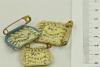
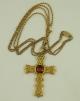
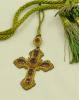
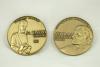
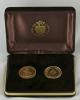
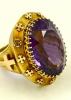
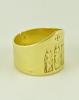
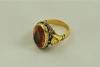
ca. 1000 religious artifacts including vestments, linens, sacred vessles, paintings, scultures, and other objects.
Área de series editoriales
Título apropiado de las series del editor
Títulos paralelos de serie editorial
Otra información de título de las series editoriales
Declaración de responsabilidad relativa a las series editoriales
Numeración dentro de la serie editorial
Nota en las series editoriales
Área de descripción del archivo
Nombre del productor
Historia administrativa
The Catholic Archdiocese of Edmonton traces its roots to the 19th century, when what is now Western Canada was a vast territory controlled by the powerful Hudson Bay Company. The inhabitants were mostly aboriginal peoples who made their livelihood through hunting, fishing and trapping. Fort Edmonton was the most important of the Hudson Bay Company’s trading posts, and its employees were generally French-speaking Catholics, many of whom transmitted the rudiments of their faith to their Métis children.
In 1822, Abbe Norbert Provencher, missionary of the Red River Settlement, became auxiliary to the Bishop of Quebec and was put in charge of this “District of the North,” an immense area spreading west from the Great Lakes to the Pacific coast and north to the Arctic Ocean.
In 1838, two priests on their way to the West Coast – Abbes Blanchet and Demers – stopped at Fort Edmonton, where they celebrated the first Mass, baptized children and blessed marriages. Their good report to Bishop Provencher led to the foundation of the first Roman Catholic mission at Lac Ste. Anne in 1843 and the building of the first chapel, a small log cabin within Fort Edmonton, in 1859.
In 1861, Father Albert Lacombe, one of the earliest missionaries in the West, founded the St. Albert mission settlement and built a log chapel for ministering to the Cree and Metis. Father Lacombe Chapel, the oldest building in Alberta, is now a Provincial Heritage Site.
In 1871 the Diocese of St. Albert was created. Several factors necessitated this move: the confederation of provinces in Canada with the promise of a transcontinental railway; the rapid disappearance of the buffalo with the resulting starvation of First Nations and Métis people, the heavy influx of white settlers of different ethnic origins and faiths, the problem of land and schools for the natives, the shortage of missionaries, schools and churches for the newcomers.
By 1889 the Saskatchewan portion was separated from the huge diocese. In the subsequent years the herds of buffalo totally disappeared, and the First Nations who signed treaties were given tracts of land and became wards of the government. Women and men religious congregations arrived to open schools for native and white children, hospitals and asylums for the elderly. They visited families scattered over the land, encouraging newcomers to group in parishes. It is estimated that St. Albert’s first bishop, Bishop Vital Grandin, walked 25,000 miles by snowshoe as he ministered to the huge diocese. When he died in 1902, the diocese had a population of some 18,000 Catholics in 30 organized parishes served by 42 Oblate Fathers and 10 secular priests.
On Nov. 30, 1912, the Episcopal See of St. Albert was raised to the status of Archdiocese of Edmonton, and its southern portion removed to form the Diocese of Calgary. Archbishop Emile Legal became the first Archbishop of Edmonton: When he died in 1920, the Catholic population of the Archdiocese numbered 38,400; there were 92 religious priests and 28 diocesan priests serving in 55 parishes and 58 missions with churches.
The Archdiocese continued to grow rapidly after the end of the First World War. The basement of St. Joseph Cathedral was built (1925); a diocesan Catholic newspaper was published (1921); St. Joseph College was incorporated (1926); the diocesan seminary opened its doors (1927). Once again, a portion of the Archdiocese was carved out; this time, it was the northern section that became the Diocese of St. Paul in 1948.
Today the Archdiocese of Edmonton includes the greater Edmonton area but also covers a geographic region stretching from the Rocky Mountains in the west to the Saskatchewan boundary in the east, from Olds in the south to Villeneuve in the north. In total the Archdiocese covers 81,151 square kilometres. It includes 65 parishes with resident priests in cities, towns, rural areas and native communities, and another 66 parishes and missions without resident priests. Within its boundaries are nine Catholic school districts and 10 Catholic health facilities including hospitals, continuing care centres and seniors residences.
Every Sunday, Mass is celebrated in 15 different languages, including French, Spanish, Polish, Chinese, Croatian, Portuguese, Vietnamese, Italian, German, Hungarian, Korean, Eritrean, Latin and American Sign Language. Every July, thousands of First Nations Catholics gather on the shores of Lac Ste. Anne for an annual pilgrimage that began more than a hundred years ago. The pilgrimage, a time of reunion, renewal and healing, has become one of the largest annual gatherings of First Nations people in Canada. Every August, another focal point for the faithful is the pilgrimage to Skaro, where Polish settlers in 1919 built a replica of the grotto at the Sanctuary of Our Lady of Lourdes in France.
Historial de custodia
Alcance y contenido
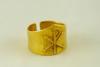
The collection includes a variety of religious objects gathered by various archivists with the intention of creating an Archdiocesean museum. Of particular significance are the following items: a large gold reliquary, the Vatican II ring worn by Archbishop Jordan at the Vatican II council in Rome, the relics of the true cross, the neo-gothic and highly ornamented gold chasubles and the apostolic delegates chalice. The collection also includes artifacts from the papal visit tour in 1987 and world youth day events celebrated throughout the Archdiocese.
The artifacts have been grouped into the following five series:
- Vestments and Linens
- Relics
- Sacred Vessels
- Medals and Signs of the Office
- Other Artifacts