
Item is an example of a medal created to commemorate the 117th Supreme Council meeting of the Knights of Columbus held in Minneaopolis, Minnesota on Aug. 3rd to 5th of 1999. This medal is ment to be worn.
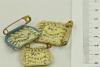
Item is an example of a medal created to commemorate the 119th Supreme council meeting of the Knights of Columbus held in Toronto, Ontario between Aug. 7th and 9th in 2001. This medal is meant to be worn.
Item is an example of the pins that were given out for the celebration of the 125th year of creation of the Diocese of St.Albert.
Item is an example of a Knights of Columbus medal made to commemorative the 128th Supreme Council meeting held in Washington D.C from Aug. 3 to 5th in 2010. Side A of the medal includes an image of a church and the Knights of Columbus logo, side B is blank. The medal is intended to be worn.
Item is an example of coins produced for the year 2000. Side A of the first coin includes an image of Christ and Side B includes the following inscription "ET LUX INTENEBRIS LUCET". Side A of the second coin features the image of the Pope and the following inscription "VENITE AD ME OMNES QUI LABORATIS ET ONERATI ESTIS ET EGO REFICIAM VOS" Side B includes the following inscription " ANNO JUBILAEI 2000".
Item is an example of set of medals for the 75th anniversary of Alberta.
Items are an example of the AGNUS DEI sacramental (for more information please read CATHOLIC ENCYCLOPEDIA 1911-AGNUS DEI). These were never abolished nor abrogated, simplely forgotten. These are not relics as such but rather like holy water or a blessed item, but even more so these were only allowed to be made by the Sumpreme Pontiff himself, after his first year then every 7 years. This wax has a special way of being made, by using the Vatican's Pashel candle and old Chrism oil, the Pope prays over this and in a "conscecrating manner" blesses this sacramental. Information paper is included.
Item is an example of a set of episcopal pins by a Bishop.
Items are example of a collection of 3 relics, pieces of cloth, which appear to be made from the vestements of Bishop Vital J. Grand. The relics are each contained in a plastic theca. Relics seem to be 2nd class.
Item is an example of a medal made for to commemorate 75 years of Rerum Novarum.
Includes one commemorative pin produced for the Alberta Teachers Association.
Item is an example of a medal produced for the Holy Year declared in 1950.
The collection includes a variety of religious objects gathered by various archivists with the intention of creating an Archdiocesean museum. Of particular significance are the following items: a large gold reliquary, the Vatican II ring worn by Archbishop Jordan at the Vatican II council in Rome, the relics of the true cross, the neo-gothic and highly ornamented gold chasubles and the apostolic delegates chalice. The collection also includes artifacts from the papal visit tour in 1987 and world youth day events celebrated throughout the Archdiocese.
The artifacts have been grouped into the following five series:
- Vestments and Linens
- Relics
- Sacred Vessels
- Medals and Signs of the Office
- Other Artifacts
Item is an example of a Roman style chasuble pre-Vatican II. The black colour indicates that this chasuble would have been worn for offices of the dead and on Good Friday. The chasuble has a simple front with minimal ornamentation and includes a simple "IHS"applique cross on the back-side.
Item is an example of a Roman style chasuble pre-Vatican II. The black colour indicates that this chasuble would have been worn for offices of the dead and on Good Friday. The chasuble has a flower motif on front-side with same flower motif on the back-side also including elaborate gold "IHS" cross in the centre of the back. It also includes a lace collar.
Item is an example of a dalmatic and diaconal stole that would be worn by a Deacon during Mass.
Item is an example of a Roman-style chasuble pre-Vatican II. The black colour indicates that this chasuble would have been worn for offices of the dead and on Good Friday. The front of the chasuble includes an embroidered cross. The back includes an embroidered "Chi Rho" sign as well as the symboles for "Alpha" and "Omega."
Item is an example of a cassock that a child would wear for altar-serving before 1970.
Item is an example of a cassock that a cleric would wear before 1970.
Item is an example of a cassock that a child would wear for altar-serving before 1970.